
Table of Contents
- What Ingredient Transparency Means in Supplements
- The Supplement Facts Label Explained: What Each Line Tells You
- Proprietary Blend in Supplements: Why Hidden Doses Undermine Trust
- How to Read Pre-Workout Labels for Real Disclosure
- Third-Party Tested Supplements and How to Verify Claims
- Run a Supplement Label Audit: A Step-by-Step Checklist
- Regulatory Context and Consumer Protections for Dietary Supplements
- Frequently Asked Questions
Last Updated: October 17, 2026
What Ingredient Transparency Means in Supplements
Ingredient transparency is the practice of disclosing every ingredient in a dietary supplement, at its actual amount, in plain terms a buyer can verify. That means full disclosure of active ingredients and inactive ingredients alike, with no undisclosed fillers, no vague "flavoring" catch-alls, and no doses hidden behind a proprietary blend.
At Executive Protection Fuel, we build for people who cannot afford surprises in a bottle: officers working long shifts, service members in rigorous training, and security professionals on high-stakes details. For that audience, ingredient transparency is not a marketing preference. It is a safety and accountability issue. A label you cannot read is a product you cannot evaluate, compare, or trust.
The Supplement Facts Label Explained: What Each Line Tells You
The Supplement Facts label is the panel that tells you what is in a product and how much. Reading it correctly comes down to four lines.
- Serving size: the amount the numbers below refer to. A scoop, two capsules, or half a tablet changes every figure on the panel.
- Amount per serving: the actual quantity of each ingredient. If a number is missing, you cannot evaluate the dose.
- % Daily Value: how much of a nutrient one serving provides relative to a standard daily intake. Many supplement ingredients have no established Daily Value, which is why the column is often blank.
- Other ingredients: the inactive ingredients, excipients, fillers, and additives used to make the product flow, bind, or taste right.
The FDA's guidance on dietary supplement labeling sets the framework for what must appear on this panel. A label that follows the format but omits amounts is technically compliant and still unhelpful to you.
Proprietary Blend in Supplements: Why Hidden Doses Undermine Trust
A proprietary blend is a group of ingredients listed together under one total weight, with no individual amounts disclosed. The FDA's dietary supplement labeling requirements permit this format, and that permission is exactly the problem.
Here is what a blend hides. You see "Energy Matrix 3,200 mg" and four ingredient names underneath. You do not see whether the caffeine is 100 mg or 300 mg. You cannot compare it to another product. You cannot check whether the dose of any single ingredient matches what published research uses. And if you are sensitive to stimulants, you have no way to judge what you are taking before you take it.
For anyone in a role where jitters, a racing heart, or an unexpected crash has real consequences, an undisclosed dose is not a minor labeling quirk. It is a variable you did not agree to.
How to Read Pre-Workout Labels for Real Disclosure
Start with the stimulants, then work down. Pre-workout labels are where disclosure problems concentrate, because energy blends are the most common place to hide amounts.
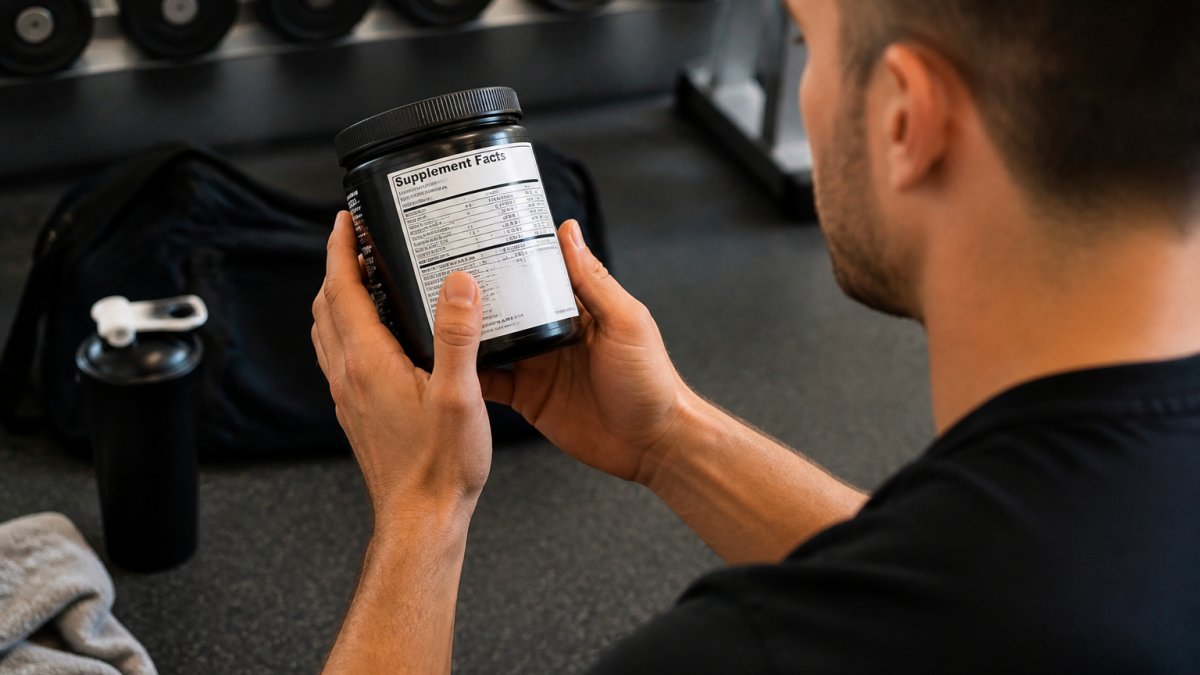
Work through these checks in order:
- Find every stimulant by name and confirm each has its own milligram amount.
- Check whether caffeine appears as a standalone figure or is buried inside a blend.
- Read the other ingredients line for dyes, sweeteners, and fillers you would rather avoid.
- Confirm the serving size matches how you actually scoop.
- Look for a batch or lot number, which you will need if you ever want to verify testing.
Our own Lemon Strike label lists its amino acid blend with L-Citrulline, L-Leucine, L-Isoleucine, L-Valine, Taurine, L-Glutamine, Niacin, and Vitamin B6 as named ingredients, and the product is lab tested with a stated 35 servings per container. That is the standard we would hold any label to: named ingredients, stated serving count, and a testing claim you can ask us to back up.

Third-Party Tested Supplements and How to Verify Claims
"Third-party tested" means an independent lab, not the manufacturer, analyzed the product.
What a certificate of analysis actually contains. A COA is a lab report, not a marketing asset.
Batch-specific versus generic testing. A generic COA is a sample from some production run, sometimes from a different year. A batch-specific COA matches the lot code on your container.
What was tested matters as much as whether it was tested. Purity and potency testing is different from contaminant screening. Potency confirms the ingredient is present at the labeled amount.
The limits of verification. Independent testing reduces risk; it does not eliminate it. A COA covers the sample tested, not every unit in the lot.
Three things to request, in order:
- A certificate of analysis (COA) for the batch you received, not a generic sample. The COA should list the lot number and the tests performed.
- The lab's identity. Independent verification means a named laboratory, not an in-house quality control line described as independent.
- What was tested. Purity and potency testing is different from contaminant screening for heavy metals, microbes, or banned substances. Ask which panel applies.
A brand that answers these three questions quickly and specifically is telling you something about how it operates. A brand that deflects is telling you something too.
EXECUTIVE PROTECTION FUEL LEMON STRIKE ENERGY PRE-WORKOUT →
Run a Supplement Label Audit: A Step-by-Step Checklist
An audit takes about ten minutes per product. Do it once for everything on your shelf and you will never buy blind again.
Work through the audit in four passes. Each pass answers a different question.
Pass 1: Capture the label. Photograph the Supplement Facts panel, the other ingredients list, and the front-of-package claims in one frame so the serving size and the marketing language stay together.
Pass 2: Check disclosure of amounts. Confirm every active ingredient has its own stated amount per serving. Flag any proprietary blend and note the total weight, then count how many ingredients sit under that total.
Pass 3: Read the inactive ingredients and warnings. Scan the other ingredients line for fillers, dyes, flow agents, and sweeteners.
Pass 4: Verify the claims. Request the certificate of analysis for the lot you received, not a generic sample. Search the FDA's recall and safety alert database for the product or brand.
- Photograph the Supplement Facts panel and the other ingredients list
- Confirm every active ingredient has its own stated amount
- Flag any proprietary blend and note the total weight and ingredient count
- Identify every stimulant and its dose per serving
- Check the serving size against your actual use
- Scan other ingredients for fillers, dyes, and additives
- Note the allergen disclosure and any shared-facility statement
- Read the warning section for population and medication limits
- Record the lot number and expiration date
- Request the COA for that lot from the manufacturer
- Compare the COA's stated potency against the label claim
- Search the FDA's recall and safety alert database for the product or brand
- Decide: keep, replace, or escalate to a question for the manufacturer
| Audit Step | What You Are Checking | Red Flag |
|---|---|---|
| Active amounts | Every ingredient has a number | Blank amounts |
| Blends | Total weight only | Multiple blends stacked |
| Stimulants | Named dose per serving | Caffeine inside a blend |
| Other ingredients | Fillers, dyes, additives | Vague "flavoring" |
| Warnings | Population and medication limits | No warning where one is expected |
| Testing | COA for your lot | Badge with no document |
| Traceability | Lot number and date | No lot code at all |
What the audit will not tell you is whether the product works. It tells you whether the label gives you enough to evaluate, compare, and ask better questions. That is the difference between a compliant label and a transparent one.
Regulatory Context and Consumer Protections for Dietary Supplements
Dietary supplements in the United States are regulated as a category of food, not as drugs. Under the FDA's dietary supplement overview, manufacturers are responsible for ensuring their products are safe and that labels are truthful and not misleading, but products do not need premarket approval before sale.
That structure puts real weight on the label and on you. The Federal Trade Commission's guidance on health claims separately governs advertising, which is why performance claims and label claims can be policed by different agencies. Regulatory compliance is the floor, not a guarantee of quality.
What protects you in practice: clear labeling, batch testing, traceability, and a manufacturer willing to answer questions about sourcing and the manufacturing process. Brand accountability is voluntary above the legal minimum, and that is precisely why it is worth demanding.
The reality is that most supplement labels are legally compliant and still leave you guessing about doses, sourcing, and testing. Our Code Orange and Lemon Strike pre-workouts are formulated for energy, focus, and endurance for the people who clock in and never clock out.

Frequently Asked Questions
What does ingredient transparency mean in supplements?
Ingredient transparency means the label lists every active and inactive ingredient with exact amounts per serving, names the source of key ingredients, and gives you enough information to compare products without guessing. It also covers honest allergen disclosure, clear serving sizes, and batch testing records you can request. A transparent label lets you see fillers, additives, and excipients rather than hiding them behind a proprietary blend. When you can read and understand the full formula, you can make informed decisions about what you put in your body.
Why is ingredient transparency important when choosing a supplement?
Transparency matters because dietary supplements are not pre-approved by the FDA before sale. Without clear disclosure, you cannot tell whether a product contains the doses it claims, whether it carries contaminants, or whether it includes allergens. For law enforcement, military, and security professionals who face drug screening, undisclosed ingredients create real risk. Transparent labels and third-party testing give you a way to evaluate product quality, potency, and purity before you buy. They also hold brands accountable and support consumer trust.
What should a transparent supplement label include?
A transparent label includes the Supplement Facts panel with exact amounts for every active ingredient, not just totals. It lists inactive ingredients such as fillers, additives, and excipients by name. It states the serving size clearly and discloses allergens. Look for a manufacturer name and address, a lot or batch number, and an expiration date. Transparency also means the brand publishes or shares third-party test results and a certificate of analysis on request. If a label hides amounts behind a proprietary blend or omits inactive ingredients, it fails the transparency test.
What is a proprietary blend, and why can it make a supplement harder to evaluate?
A proprietary blend groups several ingredients under one total weight without disclosing individual amounts. You might see 'Energy Matrix 3,000 mg' with caffeine, taurine, and tyrosine listed beneath, but no breakdown. That makes it impossible to know whether each ingredient meets effective doses or whether one stimulant dominates. For pre-workout buyers, a proprietary blend in supplements can hide underdosed aminos or excessive caffeine. It also prevents product comparison. A brand committed to ingredient transparency lists each ingredient and its amount separately.
How can I check whether a supplement's ingredients and amounts are disclosed?
Start with the Supplement Facts panel: every active ingredient should have a specific milligram amount. Check the 'Other Ingredients' line for fillers, additives, and excipients. If you see a proprietary blend, ask the brand for a full disclosure sheet. Then verify testing by requesting a certificate of analysis for the batch number on the container. Look for seals from independent testing programs and confirm the batch number matches. Finally, search the FDA warning letter database and inspect the label for allergen disclosure. If the company cannot answer basic questions about sourcing and testing, treat that as a red flag.
Does a clear supplement label mean the product has been independently tested?
No. A clear label only shows what the brand claims is in the product. Independent verification requires third-party testing, where an outside lab confirms identity, potency, and purity. Look for a certificate of analysis tied to the batch number, and check whether the testing lab is accredited. Some brands publish test results on their website. Others will email a certificate of analysis on request. A clean label plus independent verification gives you far more confidence than label clarity alone. Always ask for the batch-specific documentation.