
Table of Contents
- Step 1: Set Your Night Shift Training Anchor
- Step 2: Use a Night Shift Workout Schedule Template
- Step 3: Match Training Intensity to Sleep Quality
- Step 4: What to Look for in the Best Pre-Workout for Night Shift Workers
- Step 5: How to Recover From Workouts on Night Shift
- Step 6: Build Consistency Across 12-Hour Shifts
- Common Mistakes to Avoid When You Train While Working Night Shifts
- Frequently Asked Questions
Last Updated: October 2, 2026
Step 1: Set Your Night Shift Training Anchor
Knowing how to train while working night shifts starts with picking one fixed time to exercise and defending it. That single decision, called your training anchor, removes the daily debate about when to work out.
Pre-Shift vs. Post-Shift Exercise Timing
Pre-shift exercise gives you a natural energy lift before you clock in. A 30-minute session at moderate effort raises alertness for the first few hours of your shift.

Step 2: Use a Night Shift Workout Schedule Template
A night shift workout schedule template removes guesswork from your week, but most templates online assume a normal 9-to-5 and fall apart the moment you rotate onto a 12-hour shift. The structure below is built specifically for 12-hour shift-friendly training: low-impact, high-frequency, and anchored to the two windows your body can actually tolerate.

The 12-Hour Shift-Friendly Training Split
This split assumes three to four workdays per week on 12-hour shifts, with the remaining days as rest or active recovery. It prioritizes joint-friendly movements and keeps most sessions under 40 minutes so they fit inside a shift-change window.
| Day | Time Slot | Session Type | Duration | Why It Fits a 12-Hour Shift |
|---|---|---|---|---|
| Workday 1 | Pre-shift | Full-body strength (squat, hinge, push, pull) | 40 min | Leaves 20+ min for shower and commute before clock-in |
| Workday 2 | Post-shift | Zone 2 cardio (bike or incline walk) | 25 min | Low impact, low coordination demand after a long shift |
| Workday 3 | Pre-shift | Interval training (rower or air bike) | 30 min | Short, high-frequency stimulus without residual soreness |
| Workday 4 | Post-shift | Mobility, core, and walking | 20 min | Downshifts the nervous system before daytime sleep |
| Rest day 1 | Midday | Long walk or easy hike | 45-60 min | Builds aerobic base without taxing recovery |
| Rest day 2 | Midday | Full rest or light stretching | 15 min | Protects the sleep block before the next rotation |
How to Rotate the Template
The key is keeping the pattern stable, not the calendar. If your rotation flips from nights to days, keep the same session order and shift the clock times by no more than two hours per day. Most practitioners find that flipping the entire schedule in one jump is what wrecks sleep, not the training itself.
- Two nights on, two off: Use Workday 1 and 2 on the nights, then Rest day 1 and 2 on the off days.
- Four nights on, three off: Run Workdays 1-4 in order, then use the three off days for Rest day 1, Rest day 2, and a repeat of the Workday 1 strength session.
- Rotating weekly: Treat the first night of each rotation as Workday 1 regardless of the day of the week.
Low-Impact, High-Frequency Rules
- Cap strength sessions at 40 minutes. Beyond that, cortisol and perceived effort climb without a matching gain in adaptation.
- Choose one hinge, one squat, one push, one pull, and one carry per strength session. That is enough to maintain strength on a night shift schedule.
- Keep cardio in Zone 2 for post-shift sessions and reserve intervals for pre-shift, when coordination is highest.
- Never stack two high-intensity days back to back on a 12-hour rotation.
Step 3: Match Training Intensity to Sleep Quality
Sleep quality should set your training intensity, not your motivation. After a rough night with broken sleep, your body is not ready for max effort.
Use this simple scale:
- Slept 7+ hours: Push heavy or fast work
- Slept 5-6 hours: Keep it moderate, cut volume by a third
- Slept under 5 hours: Walk, stretch, or skip entirely
Step 4: What to Look for in the Best Pre-Workout for Night Shift Workers
The best pre-workout for night shift workers supports steady energy and focus without a hard crash later in the shift, and, critically, without wrecking the daytime sleep block your recovery depends on. Most pre-workout advice online ignores that second constraint. This section addresses it directly.
The Caffeine Timing Problem Nobody Talks About
Caffeine has a half-life of roughly five to six hours in most adults. If you take a 200 mg pre-workout at 10 PM before a shift, about half of that caffeine is still circulating at 3-4 AM, and a quarter is still active when you try to sleep at 8 AM. That is the single biggest reason night shift workers lie awake after a shift despite feeling exhausted.
What to Look for on the Label
- Caffeine dose you can verify. Look for a stated milligram amount, not a "proprietary blend." 150-200 mg is a reasonable pre-shift dose for most adults.
- L-Citrulline or L-Citrulline Malate for blood flow and endurance support. Common effective range is 6-8 g of citrulline malate.
- Beta-Alanine for buffering muscle acidity during higher-rep work. Expect the harmless tingling sensation; it fades with regular use.
- Taurine for hydration and recovery support.
- B vitamins (B6, B12) for normal energy metabolism, these support the process, they do not replace sleep.
- Electrolytes (sodium, potassium, magnesium) if you sweat heavily on shift or work in a hot environment.
- Third-party lab testing or a certificate of analysis. This matters more for shift workers because you are often taking the product at a time when your body is already under circadian stress.
What to Avoid
- Mystery blends that list caffeine amounts you cannot verify.
- High-stimulant formulas (300 mg+ caffeine) taken within six hours of sleep.
- Heavy doses of niacin if you work in a hot environment, the flush can compound heat stress.
- Pre-workouts with added sugar or heavy carbohydrates if you train post-shift and then go straight to bed.
Non-Stimulant Alternatives for Post-Shift Sessions
If you train after your shift and then sleep, skip stimulants entirely. Options that support performance without caffeine include:
- Beetroot powder or dietary nitrate for blood flow and endurance.
- Citrulline alone for pump and endurance without the stimulant load.
- A small dose of carbohydrates (20-30 g) if you have not eaten in several hours.
FDA guidance on dietary supplement labeling and proprietary blends
Step 5: How to Recover From Workouts on Night Shift
Learning how to train while working night shifts is mostly about timing your recovery, not gadgets. Your body repairs muscle during sleep, so protect the sleep block that follows training.
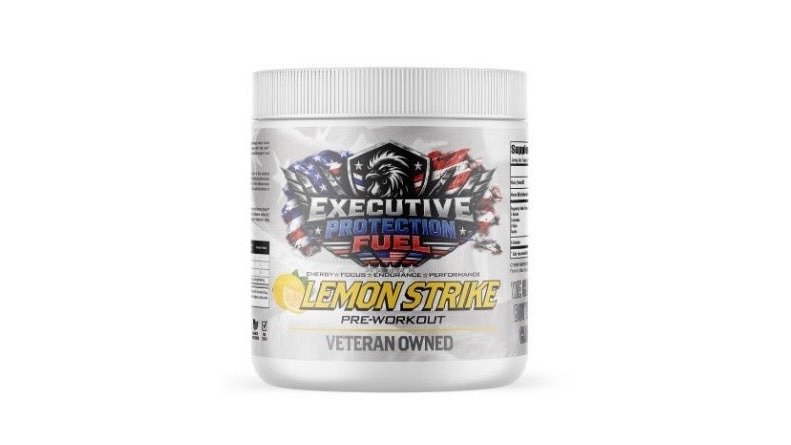
EXECUTIVE PROTECTION FUEL LEMON STRIKE →
Build these habits:
- Cool down for 5-10 minutes after lifting
- Eat protein within two hours of the session
- Keep your bedroom dark and cool for daytime sleep
- Use rest days for walking, not more lifting
Meal Timing and Caffeine Cutoffs
Eat your largest meal before your shift, not at 3 AM. Late heavy meals sit in your stomach and wreck sleep quality.
Step 6: Build Consistency Across 12-Hour Shifts
Consistency across 12-hour shifts comes from lowering the bar, not raising it. A 20-minute session you actually do beats a 90-minute plan you skip.
Use these tactics:
- Keep a gym bag packed in your vehicle
- Do short sessions on workdays, long ones on off days
- Track workouts weekly, not daily
- Plan rest days like appointments
Common Mistakes to Avoid When You Train While Working Night Shifts
The biggest mistake is training at max intensity on minimal sleep. That combination raises injury risk and slows muscle recovery.
Other common errors:
- Drinking energy drinks through the whole shift
- Skipping meals, then training on empty
- Changing workout times every day
- Ignoring caffeine timing
- Treating rest days as wasted days
Fix the sleep first. Everything else follows.
Frequently Asked Questions
Is it better to train before or after a night shift?
Training before a night shift usually works better for strength and focus because your body still has some stored energy. A short session 60 to 90 minutes before clocking in can sharpen alertness without leaving you drained. Post-shift training can work too, but keep it lighter and add 10 minutes of easy cardio or stretching first. The main rule is to keep the same slot for at least two weeks so your body adapts and your night shift training becomes a routine.
How do night shift workers recover from workouts without losing sleep?
Recovery starts with protecting your daytime sleep block. Get home, eat a protein-rich meal, and aim for 7 to 9 hours of uninterrupted sleep in a dark, cool room. Add 5 to 10 minutes of easy movement on rest days, and schedule your hardest sessions on days when you slept well. If you only slept 5 hours, cut training volume by about half. That approach keeps muscle recovery and energy levels from tanking across a run of 12-hour shifts.
What should I look for in a pre-workout for night shift workers?
Look for a formula built around amino acids and B vitamins rather than heavy stimulants. Ingredients like L-Citrulline, L-Leucine, L-Isoleucine, L-Valine, Taurine, L-Glutamine, Niacin, and Vitamin B6 support endurance and focus without the sharp spike and crash that can hit mid-shift. Executive Protection Fuel's Lemon Strike Pre-Workout uses that blend and comes in 35 servings per container. If you are subject to drug screening, choose products that are lab tested.
Can I build muscle while working night shifts?
Yes, but the schedule matters more than the program. Aim for three to four sessions per week, each 45 to 60 minutes, and place them where they will not cut into your main sleep block. Keep protein intake steady across the shift, and treat sleep as part of training. When sleep drops below 6 hours, lower training volume and skip failure sets. Muscle recovery depends on consistent stress plus consistent rest, not on how hard you push on any single night.
Training while working night shifts asks a lot from a body that is already fighting its own clock. Executive Protection Fuel builds fuel for people who work those hours, with amino-acid-based pre-workouts like Lemon Strike and Code Orange, both lab tested, veteran owned, and made in the USA. Get started with Executive Protection Fuel and give your next session the energy it deserves.