
Table of Contents
- What Tactical Training Gear Actually Needs to Do
- Tactical Workout Clothes: Fit, Fabric, and Layering
- Tactical Fitness Equipment by Training Purpose
- Strength Training Equipment That Survives Daily Use
- Functional Fitness Gear for Loaded Carries and Dynamic Work
- Matching Gear to Your Role and Training Environment
- Load Progression, Durability, and What to Skip
- Conclusion
- Frequently Asked Questions
Last Updated: October 7, 2026
What Tactical Training Gear Actually Needs to Do
Fitness gear for tactical training athletes has one job that separates it from standard gym equipment: it has to hold up under load, under stress, and under a schedule that never really stops. At Executive Protection Fuel, we build for people who train around shift work, deployments, and callouts, so we judge every piece of kit by one question.

Tactical fitness is the practice of training strength, endurance, and work capacity specifically for the physical demands of law enforcement, military, and protective roles.
General physical preparedness matters more here than peak numbers on a single lift.
Below, we break down what to buy by training purpose, what to skip, and how to size it all correctly.
Tactical Workout Clothes: Fit, Fabric, and Layering
Tactical workout clothes should fit close enough to move under a plate carrier without bunching, and loose enough to breathe during loaded carries. Fabric choice matters as much as cut.

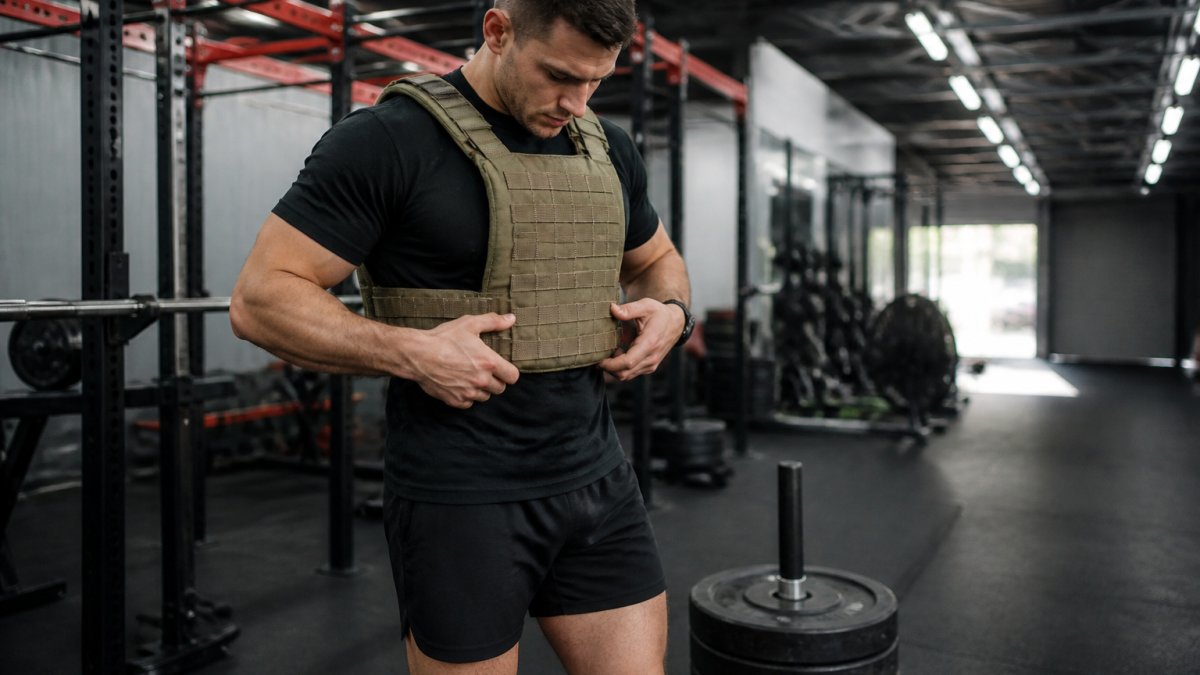
A common mistake is buying shirts one size up to "fit over" a vest. That extra fabric catches on straps and rides up during overhead work.
How Training Shirts Should Fit Under a Plate Carrier
A training shirt should sit close to the torso with no more than a finger's width of slack at the chest. If the shirt bunches at the shoulder straps, size down or switch to a closer cut. Test it by raising both arms overhead; if the hem lifts past your belt line, it will do the same under a carrier.
Tactical Fitness Equipment by Training Purpose
Tactical fitness equipment breaks into three working categories: load carriage, strength, and functional conditioning. Buying by purpose stops you from filling a gym bag with gear that duplicates what you already own.
| Category | Core Items | Primary Benefit | Typical Use |
|---|---|---|---|
| Load carriage | Weighted vest, plate carrier, sandbag | Builds work capacity under load | Rucking, carries, stair work |
| Strength | Barbell, bumper plates, dumbbells | Develops raw force | Squat, press, deadlift |
| Functional | Resistance bands, kettlebells, sled | Trains movement and agility | Sprints, drags, mobility |
Start with one item per category. Most people overspend on strength gear and underinvest in load carriage, which is the piece that actually transfers to the job.
Load Carriage: Weighted Vests, Plate Carriers, and Sandbags
A weighted vest distributes load close to the torso and suits rucking and bodyweight circuits. A plate carrier holds rigid weighted plates and mimics the real thing, which makes it the better choice for role-specific conditioning. Sandbags add an unstable load that forces your core and grip to work harder.
Strength Training Equipment That Survives Daily Use
Strength training equipment for tactical athletes needs to survive daily use, not occasional use.
Durability is where cheap gear fails. Look for welded steel frames, rubber-coated plates that protect flooring, and knurling that holds chalk without shredding your hands.
Resistance bands belong in this category too. They scale resistance without adding plates, which makes them useful for warm-ups, mobility, and travel.
Functional Fitness Gear for Loaded Carries and Dynamic Work
Functional fitness gear supports loaded carries and dynamic movements: the farmer's carry, the sandbag clean, the sled push, the sprint. These movements build the work capacity that separates a trained tactical athlete from someone who only lifts.
Resistance bands and kettlebells cover most of it. A sandbag covers the rest. The goal is scalable resistance you can adjust to the day, because some days you are fresh and some days you are coming off a night shift.
Matching Gear to Your Role and Training Environment
Most gear lists treat "tactical athlete" as one job. It is not. A patrol officer training in a garage, a soldier in a field environment, a firefighter on shift, and a civilian prepping for a selection course have different constraints, and the gear that fits one can be wrong for another.
Use the role and setting below to narrow your kit before you buy anything.
Law Enforcement: Garage or Home Gym
You train in short blocks around shift work, often alone. Prioritize gear you can set up and tear down fast and load without a spotter.
- Core kit: barbell and bumper plates, adjustable dumbbells, weighted vest, resistance bands
- Why: compound lifts build the base strength that carries over to foot pursuits and control work; a vest lets you add load carriage without a training partner
- Skip: machines that lock you into one plane and eat floor space
Military: Field or Austere Setting
Space and weight are the constraint. Everything you own has to fit in a duffel and survive being thrown in a truck.
EXECUTIVE PROTECTION FUEL - CODE ORANGE - PRE-WORKOUT →
- Core kit: sandbag, resistance bands, bodyweight-focused vest work, a jump rope
- Why: a sandbag is the most versatile single tool for austere training; it packs down, needs no rack, and trains grip, core, and conditioning at once
- Skip: anything with a power cord or a frame that bends in transit
Fire, Rescue, and Protective Details: Commercial Gym
You often train in a shared facility with limited time and equipment availability. Build around what is reliably free.
- Core kit: plate carrier, kettlebells, dumbbells, sled if the gym has one, bands as a backup
- Why: a plate carrier lets you rehearse loaded movement patterns that resemble the job; kettlebells and dumbbells cover unilateral work when racks are busy
- Skip: specialty bars you can only use at one gym
Shift Workers and Time-Limited Athletes
Your enemy is schedule, not equipment. Favor gear that supports a 20-to-30-minute session you will actually complete.
- Core kit: one kettlebell, a set of bands, a weighted vest
- Why: bands and a single bell cover warm-up, strength, and conditioning without setup; a vest turns a walk or a stair climb into a training session
- Skip: anything that requires more than two minutes to set up
Indoor vs. Outdoor vs. Field: The Real Trade-Offs
The setting changes three things: what you can drop, what you can carry, and what the surface will tolerate.
- Indoor (garage or gym): rubber-coated plates and bumper plates protect flooring; you can use heavier loads and a rack
- Outdoor (park, track, driveway): sandbags and kettlebells travel well; avoid gear that scuffs concrete or needs a rack
- Field (dirt, gravel, tent): bands, a sandbag, and a vest are the practical ceiling; leave the barbell at home
A sandbag that works in a field tent may be useless in a carpeted apartment, and a plate carrier that fits a commercial gym may be overkill for a hotel room. Match the kit to the constraint, not to a generic list.
Load Progression, Durability, and What to Skip
This is where most gear guides stop short. They tell you what to buy and skip the two questions that decide whether the kit lasts and whether you stay healthy: how fast to add load, and how to tell when gear is done.
Load Progression: A Workable Rule
Add weight only after you can complete the full session at the current load without form breaking down. That is the baseline. A few practical guardrails most practitioners find useful:
- Start light and stay there longer than feels necessary. Connective tissue and joints adapt slower than muscle. Adding load before they catch up is the fastest route to a stress injury.
- Progress one variable at a time. Add distance, load, or speed, not all three in the same week.
- Use a two-session rule. If you complete the same session twice at a given load with clean form, add a small increment the following week.
Most tactical athletes progress too fast on carries and too slow on strength. Carries feel easy until they are not, and the failure shows up in the lower back and knees rather than the muscles you are trying to train.
Durability: Where Gear Actually Fails
Durability favors fewer, better items. A single well-made vest outlasts three cheap ones, and the failure points are predictable.
Inspect these every few months, or after any hard block of training:
- Shoulder strap stitching on vests and carriers, the first point to fail under repeated load
- Buckle and hardware for cracks, bent prongs, or worn springs
- Plate pocket seams on carriers, which stretch and tear when plates shift
- Sandbag seams and closures, which blow out first at the fill opening
A simple care routine extends life: let fabric fully dry between sessions, wipe hardware, and store sandbags filled but not compressed. Rotate two training shirts instead of owning five, because fabric lasts longer when it fully dries between sessions.
Value: Cost Per Use, Not Sticker Price
The cheapest item is rarely the cheapest to own. A vest that fails in six months costs more per session than one that lasts three years. When comparing gear, ask three questions:
- How many sessions will this survive? Divide price by that number for a rough cost per use.
- What is the warranty or return window? A longer window signals the maker expects the item to last.
- Can it be repaired? Replaceable straps, buckles, and plates extend life far beyond a sealed unit.
What to Skip
- Gimmick training tools with a single use
- Oversized shirts that bunch under a carrier
- Any load-bearing gear without reinforced stitching
- Cheap plates that chip and damage flooring
Spend the money on load carriage and footwear instead. Your feet carry the whole system, and a blown-out vest or worn-out boot ends a training block faster than any missed session.
Conclusion
Building a tactical training kit is a progression, not a purchase. Start with load carriage, add strength gear, then layer in functional tools as your work capacity grows.
When your training demands match your role, you need fuel that keeps pace. Executive Protection Fuel offers a veteran-owned line built for people who never clock out, including our Code Orange pre-workout and Lemon Strike formula, both designed to support energy, focus, and endurance through long sessions.

Frequently Asked Questions
What are some good tactical workout clothes?
Look for moisture-wicking cooling fabrics, flat seams that won't rub under a plate carrier, and a cut that lets you reach overhead and squat deep without the hem riding up. Short-sleeve performance tees in the $40 range, like Executive Protection Fuel's cooling shirts, cover the training and everyday-wear bases. Size for shoulder mobility first, then torso length, since gear worn over the shirt adds bulk.
What equipment is best for strength training?
A barbell and bumper plates handle squats, deadlifts, and presses, which build the base strength tactical athletes need. Add a sandbag or weighted vest for load carriage work, and resistance bands for scalable resistance on pull and press patterns. If space is tight, a single adjustable load tool plus bands covers most strength training needs without a full rack.
How should tactical training clothes fit?
Snug through the shoulders but not restrictive, with enough room to raise both arms overhead without the shirt pulling out of your waistband. Pants and joggers need a gusseted crotch and room to squat past parallel. Test fit by doing a deep squat, a lunge, and a reach overhead in the fitting room. Anything that binds during those three movements will bind under load.
What gear do tactical athletes need for functional fitness training?
Start with a weighted vest or plate carrier for loaded carries, a sandbag for dynamic movements like cleans and carries, and resistance bands for scalable resistance. Add a durable training shirt and shorts that handle sweat and abrasion. Load progression matters more than gear volume: increase weight in small steps and keep set and rep schemes consistent so you can track work capacity over time.
Do tactical athletes need special training shoes?
Not a tactical-specific shoe, but a stable training shoe with a firm heel for lifting and a flatter profile for carries and sled work. Running shoes with soft, tall cushioning are unstable under a loaded barbell. Many tactical athletes keep two pairs: a flat, stable shoe for strength and load carriage days, and a running shoe for endurance work.